
Struggling With Self-Acceptance? Read This

Have you ever caught yourself thinking:
“Why am I like this?”
“I should be better by now.”
“Everyone else seems to have it together… what’s wrong with me?”
Or maybe it’s quieter than that—but constant.
A subtle, ongoing sense that:
- You’re not quite where you “should” be
- You need to fix something about yourself before you can feel okay
- You’re always just slightly behind, slightly off, or slightly not enough
And even when things are going well, there’s still that voice in the background.
Evaluating. Comparing. Correcting.
If that feels familiar, you’re not alone—and more importantly, this isn’t because you’re incapable of self-acceptance.
It’s usually because you’ve learned to relate to yourself through pressure, expectation, and self-criticism, instead of understanding.
What Self-Acceptance Actually Means (Because It’s Often Misunderstood)
Let’s clear something up first.
Self-acceptance does not mean:
- Thinking you’re perfect
- Never wanting to grow
- Ignoring your mistakes
- “Settling” for less
And it definitely doesn’t mean:
“This is just who I am, so I’ll never change.”
Self-acceptance is actually much more grounded than that.
It means:
- Acknowledging your thoughts, emotions, and patterns without immediately judging them
- Recognizing where you are right now—without needing to rush out of it
- Understanding yourself before trying to change yourself
It’s not the opposite of growth.
It’s what makes healthy growth possible.
Because when everything is driven by self-criticism, change tends to come from pressure.
But when it’s grounded in acceptance, change comes from awareness.
Signs You Might Be Struggling With Self-Acceptance
It’s not always obvious. Sometimes it shows up in ways that feel normal.
You might notice:
- You’re very hard on yourself, even for small mistakes
- You struggle to feel proud of yourself without immediately minimizing it
- You compare yourself to others often (even when you don’t want to)
- You feel like you need to “fix” yourself before you can feel confident
- You replay situations and criticize how you showed up
- You feel uncomfortable just being with yourself without distraction
And underneath all of that, there’s often a deeper feeling:
“I’m not enough as I am.”
That belief doesn’t come out of nowhere—it’s usually built over time.
Where Self-Criticism Comes From
Self-criticism often develops as a way to cope.
It can come from:
- Environments where you were expected to perform or achieve
- Experiences where you felt judged, compared, or misunderstood
- Learning that being hard on yourself keeps you “in check”
At some point, your brain made a connection:
“If I push myself, I’ll be better.”
And while that might have helped in certain situations, over time it can turn into a constant internal pressure that’s hard to turn off.
So self-acceptance isn’t about “getting rid” of that voice overnight.
It’s about changing how you relate to it.
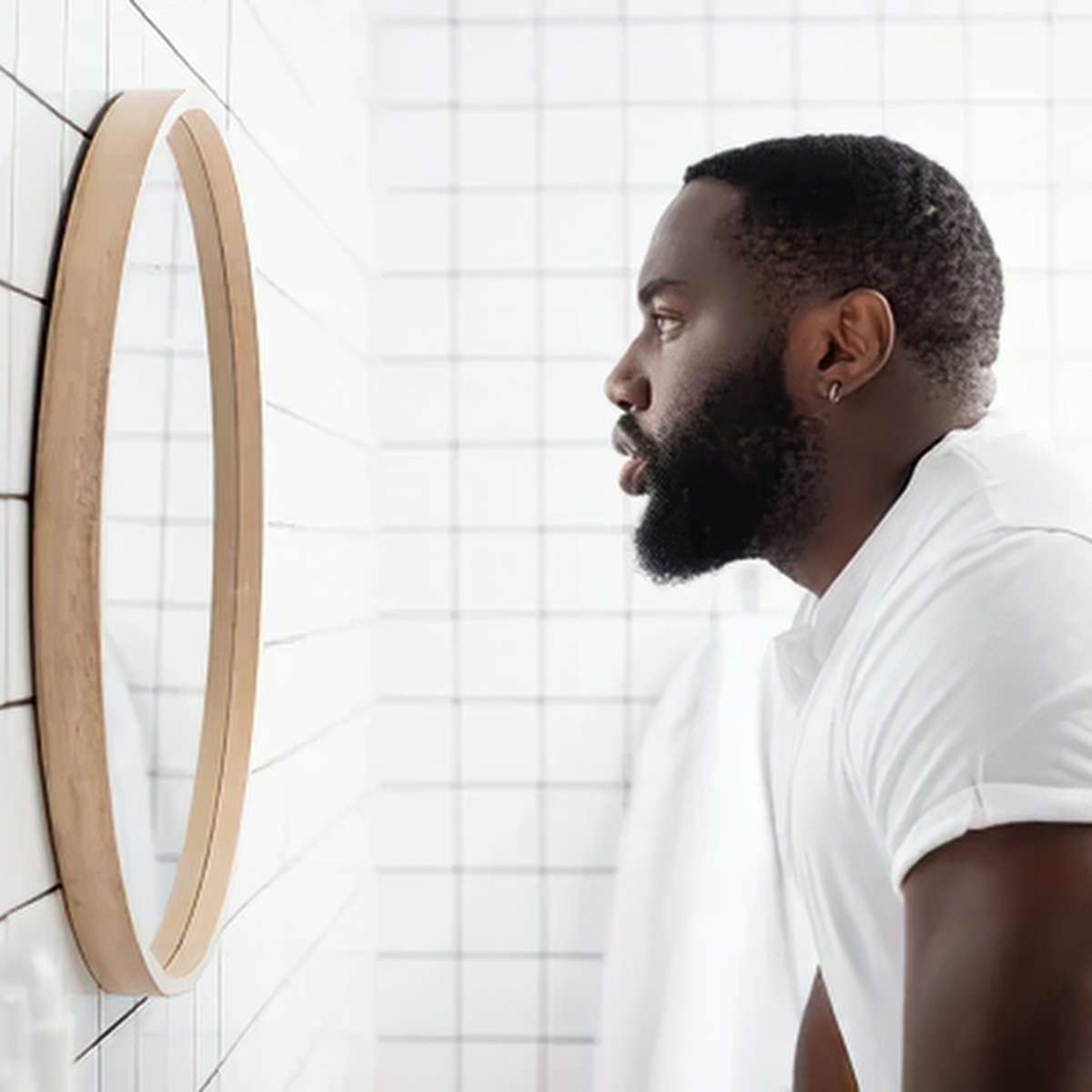
6 Ways to Start Practicing Self-Acceptance
1. Notice How You Talk to Yourself (Without Trying to Fix It Right Away)
Before you can change your self-talk, you have to become aware of it.
A lot of self-criticism happens automatically. It’s quick, subtle, and often feels like “just the truth.” You might not even realize how often you’re being hard on yourself because it’s become your default.
Instead of trying to immediately replace those thoughts, start by noticing them.
Pay attention to:
- The tone you use with yourself
- The situations where self-criticism shows up the most
- The kinds of things you say internally after mistakes or uncomfortable moments
You might hear things like:
“That was so stupid.”
“Why would I say that?”
“I should’ve done better.”
The goal here isn’t to argue with those thoughts yet—it’s to recognize that they’re happening.
Because awareness creates space.
And space is where change begins.
2. Stop Treating Every Thought Like It’s a Fact
One of the biggest barriers to self-acceptance is believing everything your mind tells you.
Thoughts can feel convincing—especially the critical ones. But not every thought is an accurate reflection of reality. Many of them are shaped by past experiences, assumptions, or emotional states.
Instead of immediately agreeing with your thoughts, start creating a bit of distance.
You can gently remind yourself:
- “This is a thought, not necessarily a fact”
- “This might be my inner critic speaking”
- “I don’t have to fully believe this right now”
You’re not trying to force positive thinking—you’re just loosening the grip of automatic self-judgment.
3. Understand Yourself Before Trying to Change Yourself
A lot of people jump straight into self-improvement without first understanding why they do what they do.
Self-acceptance asks you to pause that instinct.
Instead of:
“I need to stop being like this”
Try:
“Why does this make sense for me?”
For example:
- If you procrastinate, is it tied to fear of failure or overwhelm?
- If you avoid certain situations, is it connected to anxiety or past experiences?
- If you’re hard on yourself, is it because you learned that’s how you stay motivated?
When you understand the function behind your behavior, it becomes easier to respond with compassion instead of criticism.
4. Let Go of the “I’ll Accept Myself When…” Mindset
A lot of self-acceptance gets delayed.
It sounds like:
- “I’ll feel good about myself when I’m more confident”
- “I’ll accept myself once I fix this part of me”
- “I just need to get to a better place first”
But that creates a moving target.
Because once you reach one goal, your brain often creates another.
Self-acceptance isn’t something you earn later—it’s something you practice now, even while you’re still growing.
That might look like:
- Accepting that you’re a work in progress
- Recognizing that you can want change without rejecting yourself
- Allowing yourself to be imperfect without turning it into a flaw
Growth and acceptance can exist at the same time.
5. Practice Responding to Yourself, Not Reacting to Yourself
When something goes wrong, most people react to themselves immediately.
The reaction might be:
- Harsh
- Critical
- Dismissive
Self-acceptance invites a different response.
Instead of reacting, you pause and respond with a bit more intention.
That could sound like:
- “That didn’t go how I wanted, but that’s okay”
- “I can learn from this without tearing myself down”
- “This moment doesn’t define me”
It might feel unnatural at first—especially if you’re used to being critical.
But over time, that shift from reaction to response creates a more supportive internal environment.
6. Get Comfortable With Being a Work in Progress
Self-acceptance isn’t a destination—it’s an ongoing practice.
There will still be moments where:
- You fall back into old thought patterns
- You feel critical of yourself
- You struggle to feel fully okay with where you are
That doesn’t mean you’re doing it wrong.
It just means you’re human.
Instead of expecting consistency, focus on returning to awareness.
Coming back to:
- Curiosity instead of judgment
- Understanding instead of pressure
- Compassion instead of criticism
The goal isn’t to never struggle with self-acceptance again.
It’s to recognize when you’re not practicing it—and gently come back to it.

Why Self-Acceptance Feels So Uncomfortable at First
Here’s something people don’t talk about enough: self-acceptance can actually feel… wrong at the beginning.
Not in a dramatic way—but in a subtle, almost unfamiliar way.
If you’re used to motivating yourself through pressure, criticism, or high expectations, then shifting into acceptance can feel like:
- You’re being too easy on yourself
- You’re lowering your standards
- You’re “letting things slide”
Your brain might even push back with thoughts like:
“If I stop being hard on myself, I’ll get worse.”
“This isn’t how I improve.”
But that discomfort doesn’t mean self-acceptance is wrong—it means it’s new.
You’re learning a different way of relating to yourself. One that isn’t based on constant correction or self-monitoring.
And just like any shift, it takes time for your system to trust it.
So if self-acceptance feels unnatural at first, that doesn’t mean it’s not working.
It usually means:
you’re doing something different than what you’ve always done.
You Can Accept Yourself and Still Want More for Yourself
A common misconception is that self-acceptance means you stop growing.
That if you accept where you are, you’ll lose motivation to change anything.
But in reality, the opposite tends to happen.
When you’re constantly criticizing yourself, your energy often goes toward:
- Fixing perceived flaws
- Avoiding mistakes
- Trying to meet unrealistic expectations
That kind of pressure can actually lead to:
- Burnout
- Avoidance
- Feeling stuck
Self-acceptance shifts that dynamic.
It allows you to say:
- “I can see where I am without judging it”
- “I can want growth without rejecting myself in the process”
Growth doesn’t stop—it just becomes more sustainable.
Because it’s no longer coming from:
“I need to change because I’m not enough.”
It comes from:
“I want to grow because I care about myself.”
What Changes When You Start Accepting Yourself
Self-acceptance isn’t always loud or obvious.
It doesn’t necessarily feel like a huge shift overnight.
It often shows up in smaller, quieter ways.
You might notice:
- You don’t spiral as long after making a mistake
- You’re a little less harsh with your self-talk
- You recover from difficult emotions more quickly
- You feel less pressure to be perfect all the time
It can also change how you relate to others.
When you’re not constantly evaluating yourself, you may:
- Feel more present in conversations
- Compare yourself less
- Set boundaries more easily
- Feel more comfortable being seen as you are
It’s not about becoming a completely different person.
It’s about feeling a little more at ease within yourself.
The Work Isn’t to Become Someone Else—It’s to Come Back to Yourself
A lot of people approach self-growth with the mindset of becoming “better.”
More confident.
More put together.
More like the version of themselves they think they should be.
But self-acceptance shifts the focus.
It’s less about becoming someone new—and more about coming back to who you already are, without all the layers of judgment.
That means:
- Letting go of unrealistic expectations
- Recognizing the parts of yourself you’ve been rejecting
- Allowing yourself to exist without constant self-correction
It’s not always easy.
But it’s a lot more sustainable than constantly trying to fix yourself.

Let’s Be Real for a Second
Self-acceptance doesn’t happen overnight.
It’s not something you read about once, resonate with for a moment, and suddenly everything feels different the next day. It’s not a switch you flip where you instantly feel confident, grounded, and fully okay with yourself all the time.
It’s much quieter than that.
Self-acceptance is something you practice—again and again—in small, everyday moments that often don’t feel significant at the time.
It happens:
- When you notice your thoughts instead of automatically believing them
- When you catch yourself being harsh and soften it, even slightly
- When you pause before jumping to judgment and choose curiosity instead
- When you let a mistake exist without turning it into a reflection of your worth
And a lot of the time, it won’t feel like a big breakthrough.
It might feel subtle.
Almost like nothing changed.
But those moments matter more than you think.
Because over time, they start to shift something deeper—how you relate to yourself.
You might notice:
- You don’t spiral as long after something goes wrong
- Your inner voice feels a little less intense
- You recover more quickly from difficult emotions
- You feel a bit more space between you and your thoughts
It’s not about never struggling again.
It’s about not getting as stuck in the struggle.
And that shift doesn’t come from forcing yourself to feel differently—it comes from showing up differently, little by little.
You Don’t Have to Do This Alone 💬
If self-criticism is something you’ve been carrying for a long time, it makes sense that it’s not easy to shift on your own.
Because it’s not just a habit—it’s often something that’s been reinforced over time. It can feel automatic, familiar, and even necessary in a way that’s hard to break out of without support.
You might understand, logically, that being hard on yourself isn’t helping—but still find yourself falling into the same patterns.
And that’s where therapy can really help.
At KMA Therapy, we work with you to:
- Understand where your self-criticism comes from—not just on the surface, but at a deeper level
- Recognize the patterns that keep it going, even when you want to change
- Build a more supportive and balanced relationship with yourself
- Develop tools to navigate your thoughts and emotions in a way that feels realistic and sustainable
It’s not about forcing positivity or pretending everything is okay.
It’s about creating a space where you can:
- Be honest about how you feel
- Explore your patterns without judgment
- Learn new ways of responding to yourself that actually feel doable
Because self-acceptance isn’t about becoming someone completely different.
It’s not about fixing every part of yourself or reaching some ideal version.
It’s about learning how to feel more at ease with who you already are—while still allowing yourself to grow.
And that’s something you don’t have to figure out alone.
✨ If this resonated with you, book your 15-minute discovery call today. Let’s work toward a version of you that feels less critical—and more understood.


